Monday, 19 April 2010

Full specs

The full specs of the DNA platform:
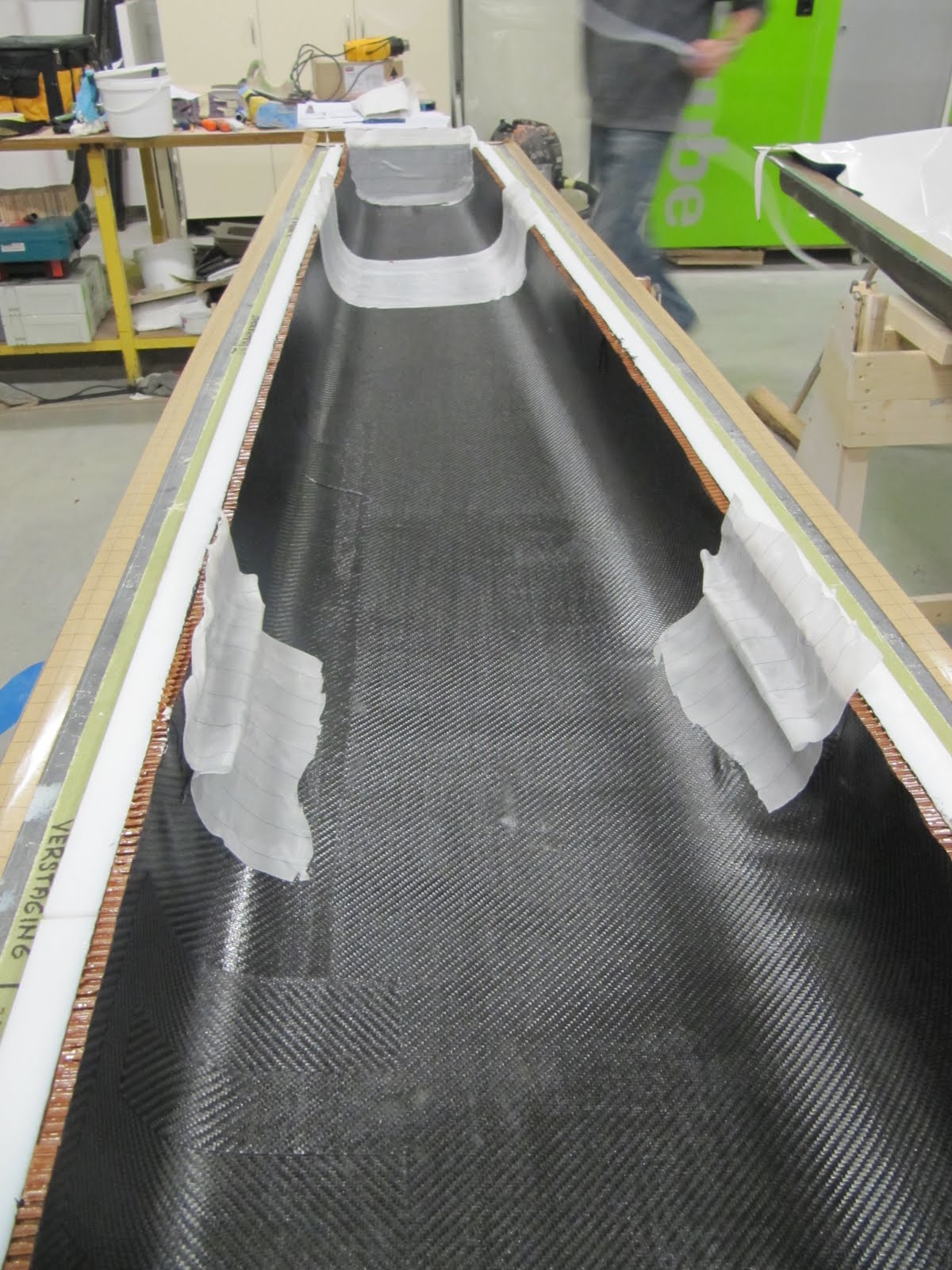
  • Carbon prepreg-Nomex (honeycomb) oven cured hulls
  • Hulls and beams painted in Awlgrip yachtpaint
  • Glued in profiled carbon beams
  • Curved carbon pre-preg daggerboards radius 120 cm
  • Pre-preg carbon rudderblades
  • Aluminium ruddercasings
  • Carbon tillerbar
  • Trampoline with pockets for both daggerboards and snacks
  • Adjustable daggerboard rake for finetuning
  • Extra stiff traveller track

Details of DNA


(c) Mark Cole www.eyeforlife.com


In the pics you can see the special bow (mix of Alinghi and BOR).  The special profile beams for less drag and extra stifness. The system with whch you can adjust the rake of the curved daggerboards, the flat transom, and the clean construction for the travller track.

Friday, 9 April 2010

Introduction A-class; Box rule rules!

Most readers of this blog will be familiair with the A-class and its box rule. Others might wonder what it is.
A-class is a development class where the boats have to fit in a box; length 5,49m, width 2,30, sailarea 13,94m2 and weight 75 kgs.
Within the class there several manufactureres with different types of boats, several mastmakers and sailmakers. While one might wonder if success does not become an expensive battle for the right sailing gear, reality shows the opposite. Most standard classes flourish for a while and get obsolete because they do not innovate. A-class has adopted many innovations over the years (carbon masts, curved daggerboards, square tops, upside-down hulls, wavepiercing) and is flourishing in Europe, USA and Autsralia. Competition between parts and boat suppliers keep prices reasonable and the best sailors still win all the regatta's.
There are rigs for heavy guys, small guys & ladies who all can be competive if they choose the right rig for their weight. One can use only one sail in a regatta, what has led to a development of allround rigs.
Carbonhulls are strong and durable, with a 5 year old boat you are still competive. While new boat prices have gone up, the cost of sailing has actual declined.
Anyone who can sail a dinghy or beachcat can sail an A-class within a few hours of practice, even if you are not used to use a trapeze harness. It is light sensitive boat which provides lost of feedback. It is smooth, simple and fast.
Flying a hull while nobody else can is massive fun, sailing wildthing in strong gusts is a pure thrill.
A-class attracts many former Olympians (Star, Tornado, 470), dinghy sailors (Laser, Contender),sportboat sailors (Maxfun, Melges) and America cup sailors who simply want to have a good time.

Pics Cesenatico (click on pics!)


©Eva Fagnoli http://www.evarte.it/

Thursday, 8 April 2010

Design Philosophy Part 4 Design Process (Digitizing)

The DNA is completely CAD designed in the state of the art Think Design software package, normally only used by designers in the automotive.
Two huge advantages were created by this. 1. we could optimize hullshape and hulldesign(styling) at the same time,
2. All production preperation steps were simplified because all measurements could be generated by the design itself. e.g. Parts (bulkheads, the assembly jig) could be cut by a waterjet with a within tens of  a millimeter.
The digitizing has contributed to a production system that uses far less hours to produce a boat than in more traditional approaches.
The digitizing made it also possibele to compare designs and to validate the new design.

Design Philosophy Part 3 Construction

Modern A-classes are glued together instead of bolted together. This is lighter and stiffer. We took this a step further by fully integrating the beams into the hull construction. Beams, hull and bulkheads are build into an integrated solution for maximum stiffness and strength for the given weight.

Design Philosophy Part 2 Hullshape

The hull is a wave piercer, with a cutaway bow for minimum friction and wave drag. Also known as a upside down design. The hull is an evolution of the Flyer 1 (the mother of all modern designs) and the Nikita (the first succesful design with curved boards). With slightly more volume the boat is optimized for 80+ kg sailors, who can push the boat harder than ever before.
The curved boards increase downwind speeds tremendously and simplify handeling, while the boards stay down downwind.
The latest America's cup designs of BMW-ORACLE and Alinghi were heavily influenced by A-cat designs and A-cat technology. These teams with their deep pockets brought catdesign to a higher level and we on our part  build/designed on that. Look e.g. at the shape of the transom/rearbeam (Alibghi) or the shape of the nose (mix of Alinghi and BOR).
The rearbeam which is bended and goes into the hull creates a perfect hanging position for pushing the boat downwind. On former designs you had either to sit in front of the beam or got locked behind it.

Design Philosophy Part 1 Materials

When we decided to build a new A-class the choice for prepreg carbon-nomex (honeycomb) was an obvious one for us.
A carbon-nomex boat is stiff, strong & durable. Instead of building a boat a few kilos under minium weight we choose to add extra carbonfibers to make the boat even stronger and stifffer.
The surface is spraypainted in awlgrip yachtpaint. The result is a high gloss finish, which is more UV resistant and harder than the traditional gelccoat surface.
Choosing he materials is only one part of the equation. Once one decide to use such high class materials one needs high quality tooling as well. All moulds are build in carbon and all parts are oven cured ('baked') in specially for ARC designed ovens.
The low tempreture epoxy prepreg (preimpregnated fibers which are stored in a fridge) system leads to a significantly higher investment in tooling and production setup but the system is beneficial in the operating costs, because less man hours are necessary to produce a complete boat.
For the sailors this means that boat is only slightly more expensive than handlaminated boats, while at the same time they get a stronger, stiffer and more durable boat (lower sailing costs). Increased stifness also leads to a higher performace in almost any condition.


Wednesday, 7 April 2010

Welcome

Advanced Racing Catamarans has introduced the DNA A-class catamaran at Cesenatico during the Vele de Pasqua. It made a succesful debut scoring a third overall and winning the third race in which Roeland Wentholt did beat Bob Baier, the current European Champion. (pic of the shake down on the Wolderwijd in 6 bft just 3 days before leaving for Cesenatico)